Found 8 results for “free”

  • Unlock the Benefits of Using Invoice Templates for Your Business


    Invoice templates streamline billing, reduce errors, save time, and enhance professionalism for your business.


    Invoicing is an essential part of every business, but it often goes unnoticed. Fortunately, a wide variety of free invoice templates are available online, making it easier for businesses from all industries to streamline their billing process.


    Tap the link, to get started
    https://www.invoicetemple.com


    #free invoice templates #invoice templates for your business #invoice #pdf invoice template
    Unlock the Benefits of Using Invoice Templates for Your Business Invoice templates streamline billing, reduce errors, save time, and enhance professionalism for your business. Invoicing is an essential part of every business, but it often goes unnoticed. Fortunately, a wide variety of free invoice templates are available online, making it easier for businesses from all industries to streamline their billing process. Tap the link, to get started https://www.invoicetemple.com #free invoice templates #invoice templates for your business #invoice #pdf invoice template
    Like
    1
    0 Yorumlar 0 hisse senetleri 289 Views 0 önizleme
  • Zulu King's Regiments Now Leading Anti-immigration Protests In SA
    South Africa is seeing a rare and powerful sight: thousands of Zulu regiments marching through city centres in full traditional gear, carrying weapons that symbolise a warrior past.


    At first glance, it looks like a show of force. The shields, the chants, the tight formations. But there is more going on beneath the surface. These are Amabutho – a structured, disciplined force with deep roots in Zulu history, whose chain of command runs up through traditional leaders to King Misuzulu kaZwelithini.


    That matters.


    Unlike many political marches that break into chaos, the Amabutho contingents have shown remarkable control amid protests in Johannesburg, Pretoria and Durban against undocumented immigration, high crime rates, and socio-economic challenges many locals blame on foreign nationals.


    There was none of the looting on the scale of past xenophobic flare-ups, and the regiments themselves have largely avoided clashes with police – in some cases, officers have stood calmly alongside march leaders.


    This discipline is not by accident. It is enforced.


    Nkosikhona Ndabandaba, known as Phakelumthakathi, who leads many of these marches, has made it clear that violence will not be tolerated. In one widely shared video, he uses a sjambok (whip) on a supporter trying to attack foreign nationals, his message simple: the protest must stay peaceful. Inside the ranks, indunas from hostels and townships guide the movement, manage the crowd, and make sure instructions are followed.


    THE RISK WHEN PEOPLE FREL LEFT BEHIND


    The role of King Misuzulu is central to all of this. The Amabutho do not act in a vacuum. Their legitimacy comes from the Zulu royal house, and when they move in such large numbers, it signals approval from the top. That link to the king also helps explain why security forces have taken a softer approach. Authorities understand how Amabutho operate. They know this is not a loose gathering but a structured system with leadership and rules.


    So far, that structure has helped contain violence rather than fuel it.


    But the situation is not without risk.


    These marches are happening in a country under pressure. Unemployment, at 32.9%, has remained stubbornly high. Many people feel left behind. In townships and informal settlements, competition for work, space, and services is intense. Immigration has become a flashpoint in that struggle.


    South Africa has laws that allow skilled people to enter the country. But in the informal economy, enforcement is weak. Documentation is often unclear. This creates frustration among citizens who feel the system is not working for them.


    That frustration is now on the streets.


    Civic movements and political groups are tapping into it. They call for mass deportations, demand tighter controls, and say they are putting “South Africans first”. Some of these demands are about law enforcement. But the methods used on the ground do not always follow the law.


    This is where the danger grows.


    It doesn’t take much to erupt into chaos
    The Amabutho have, for now, brought order to these protests. But they are not the only actors. Political parties and groups like Operation Dudula – the anti-migrant movement halted last November by a high court order over a violent campaign – are also present, and their approach is often more aggressive. In some cases, protests have shifted from marching to intimidation. Shops are forced to close. Migrants are targeted.


    A traditional force that follows leadership and values discipline is now mixing with political and civic groups pushing a harder line. As these groups blend, the risk increases. A peaceful march can change quickly if control is lost, and once a small group sparks violence, even disciplined formations struggle to contain the chaos.


    President Cyril Ramaphosa has tried to strike a balance. In his Freedom Day address in Bloemfontein on April 27, he acknowledged “legitimate concerns” about illegal migration while warning South Africans against letting those concerns “breed prejudice towards our fellow Africans”. That balance matters. It is also hard to maintain on the ground.


    The deeper issue is the gap left by the state. For years, weak enforcement, poor service delivery, and slow systems have created frustration. In that gap, community movements have stepped in. They organise, they mobilise, they act. Sometimes within the law. Sometimes beyond it.


    The Amabutho marches sit right at the centre of this moment.


    They show that large groups can organise without descending into chaos. That discipline and leadership can hold even in tense situations. But they also show how quickly things could shift.


    The anger driving these protests is real. It comes from poverty, unemployment, and a sense that the system is failing ordinary people. But anger does not always find the right target. It is easier to confront a foreign shopkeeper than to challenge the systems that allow exploitation. It is easier to push out a street trader than to fix broken regulation.


    That is how frustration becomes xenophobia.


    Once people start deciding who belongs and who does not, outside the law, it becomes very hard to stop. Today it may be migrants. Tomorrow it could be anyone seen as an outsider.


    The Amabutho have shown restraint. Their link to King Misuzulu and their internal discipline have kept things calm. But the growing involvement of political groups is adding pressure that traditional structures alone cannot absorb.


    The line between protest and violence is still visible. But it is getting thinner.


    If the state does not step in with clear, consistent enforcement of the law, others will continue to fill the space. And not all of them will choose discipline over chaos.
    https://www.youtube.com/watch?v=MHyWNyVDUj0?si=vravT0F7w5XGxyMV

    Zulu King's Regiments Now Leading Anti-immigration Protests In SA South Africa is seeing a rare and powerful sight: thousands of Zulu regiments marching through city centres in full traditional gear, carrying weapons that symbolise a warrior past. At first glance, it looks like a show of force. The shields, the chants, the tight formations. But there is more going on beneath the surface. These are Amabutho – a structured, disciplined force with deep roots in Zulu history, whose chain of command runs up through traditional leaders to King Misuzulu kaZwelithini. That matters. Unlike many political marches that break into chaos, the Amabutho contingents have shown remarkable control amid protests in Johannesburg, Pretoria and Durban against undocumented immigration, high crime rates, and socio-economic challenges many locals blame on foreign nationals. There was none of the looting on the scale of past xenophobic flare-ups, and the regiments themselves have largely avoided clashes with police – in some cases, officers have stood calmly alongside march leaders. This discipline is not by accident. It is enforced. Nkosikhona Ndabandaba, known as Phakelumthakathi, who leads many of these marches, has made it clear that violence will not be tolerated. In one widely shared video, he uses a sjambok (whip) on a supporter trying to attack foreign nationals, his message simple: the protest must stay peaceful. Inside the ranks, indunas from hostels and townships guide the movement, manage the crowd, and make sure instructions are followed. THE RISK WHEN PEOPLE FREL LEFT BEHIND The role of King Misuzulu is central to all of this. The Amabutho do not act in a vacuum. Their legitimacy comes from the Zulu royal house, and when they move in such large numbers, it signals approval from the top. That link to the king also helps explain why security forces have taken a softer approach. Authorities understand how Amabutho operate. They know this is not a loose gathering but a structured system with leadership and rules. So far, that structure has helped contain violence rather than fuel it. But the situation is not without risk. These marches are happening in a country under pressure. Unemployment, at 32.9%, has remained stubbornly high. Many people feel left behind. In townships and informal settlements, competition for work, space, and services is intense. Immigration has become a flashpoint in that struggle. South Africa has laws that allow skilled people to enter the country. But in the informal economy, enforcement is weak. Documentation is often unclear. This creates frustration among citizens who feel the system is not working for them. That frustration is now on the streets. Civic movements and political groups are tapping into it. They call for mass deportations, demand tighter controls, and say they are putting “South Africans first”. Some of these demands are about law enforcement. But the methods used on the ground do not always follow the law. This is where the danger grows. It doesn’t take much to erupt into chaos The Amabutho have, for now, brought order to these protests. But they are not the only actors. Political parties and groups like Operation Dudula – the anti-migrant movement halted last November by a high court order over a violent campaign – are also present, and their approach is often more aggressive. In some cases, protests have shifted from marching to intimidation. Shops are forced to close. Migrants are targeted. A traditional force that follows leadership and values discipline is now mixing with political and civic groups pushing a harder line. As these groups blend, the risk increases. A peaceful march can change quickly if control is lost, and once a small group sparks violence, even disciplined formations struggle to contain the chaos. President Cyril Ramaphosa has tried to strike a balance. In his Freedom Day address in Bloemfontein on April 27, he acknowledged “legitimate concerns” about illegal migration while warning South Africans against letting those concerns “breed prejudice towards our fellow Africans”. That balance matters. It is also hard to maintain on the ground. The deeper issue is the gap left by the state. For years, weak enforcement, poor service delivery, and slow systems have created frustration. In that gap, community movements have stepped in. They organise, they mobilise, they act. Sometimes within the law. Sometimes beyond it. The Amabutho marches sit right at the centre of this moment. They show that large groups can organise without descending into chaos. That discipline and leadership can hold even in tense situations. But they also show how quickly things could shift. The anger driving these protests is real. It comes from poverty, unemployment, and a sense that the system is failing ordinary people. But anger does not always find the right target. It is easier to confront a foreign shopkeeper than to challenge the systems that allow exploitation. It is easier to push out a street trader than to fix broken regulation. That is how frustration becomes xenophobia. Once people start deciding who belongs and who does not, outside the law, it becomes very hard to stop. Today it may be migrants. Tomorrow it could be anyone seen as an outsider. The Amabutho have shown restraint. Their link to King Misuzulu and their internal discipline have kept things calm. But the growing involvement of political groups is adding pressure that traditional structures alone cannot absorb. The line between protest and violence is still visible. But it is getting thinner. If the state does not step in with clear, consistent enforcement of the law, others will continue to fill the space. And not all of them will choose discipline over chaos. https://www.youtube.com/watch?v=MHyWNyVDUj0?si=vravT0F7w5XGxyMV

    0 Yorumlar 0 hisse senetleri 133 Views 0 önizleme
  • Trader, Students Clash Over Business Competition.
    Outrage in Anambra: Students Protest After Trader Allegedly Blocks Rival Business Near Lodge


    A dispute between a trader and a student in Umueri has sparked debate online after students accused a local businesswoman of attempting to stop one of them from operating a similar business near their lodge.


    According to claims made in a circulating video, the conflict began after the student allegedly decided to start selling products in the same area where the woman already runs her business. Some students argued that the trader was trying to prevent competition, while others believe tensions escalated because the issue was not peacefully resolved at an early stage.


    The incident has generated mixed reactions on social media, with many Nigerians debating whether the woman has the right to protect her business space or whether the student is equally free to engage in lawful trade despite existing competition.


    Observers say the situation highlights how unresolved disagreements over business and territorial influence can sometimes grow into larger confrontations if not properly managed through dialogue and understanding.
    https://www.youtube.com/watch?v=wo3rpV4X26o?si=z8nkaWAfqhjRalQb
    Trader, Students Clash Over Business Competition. Outrage in Anambra: Students Protest After Trader Allegedly Blocks Rival Business Near Lodge A dispute between a trader and a student in Umueri has sparked debate online after students accused a local businesswoman of attempting to stop one of them from operating a similar business near their lodge. According to claims made in a circulating video, the conflict began after the student allegedly decided to start selling products in the same area where the woman already runs her business. Some students argued that the trader was trying to prevent competition, while others believe tensions escalated because the issue was not peacefully resolved at an early stage. The incident has generated mixed reactions on social media, with many Nigerians debating whether the woman has the right to protect her business space or whether the student is equally free to engage in lawful trade despite existing competition. Observers say the situation highlights how unresolved disagreements over business and territorial influence can sometimes grow into larger confrontations if not properly managed through dialogue and understanding. https://www.youtube.com/watch?v=wo3rpV4X26o?si=z8nkaWAfqhjRalQb
    Love
    Angry
    2
    1 Yorumlar 0 hisse senetleri 218 Views 0 önizleme
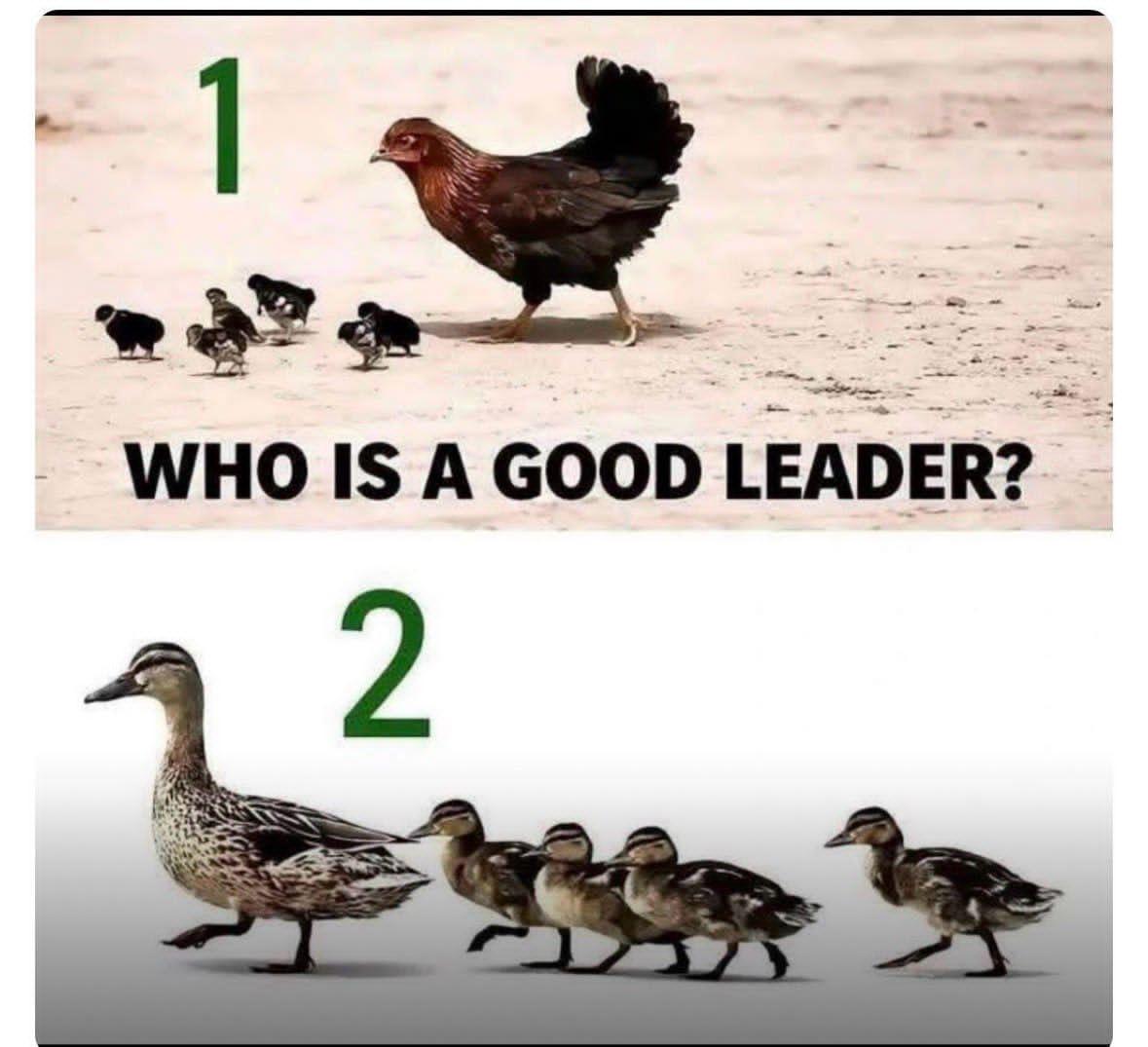
  • The Duck or the Chicken?
    The Secret to Versatile Leadership 🦆🐓


    ​I recently saw this image, and it sparked a realization.


    The beauty of these two images is that they aren’t "Right vs Wrong", they are "Context vs Context." The "best" leader isn't the one at the front or the one at the back. It’s the one who knows when to switch positions.
    In leadership theory, this is known as Situational Leadership.


    ​1. Leading from Behind (The Chicken):
    This is about Empowerment and Safety.
    When a team is experienced and skilled, they don’t need a pathfinder, they need a guardian. By walking behind, you give your team the freedom to explore and lead, while you stay back to ensure no one is left behind and the big picture remains secure.


    ​2. Leading from the Front (The Duck):
    This is about Clarity and Momentum. When a team is facing a brand-new challenge, a tight deadline, or a period of uncertainty, they need a trailblazer. They need someone to absorb the "wind resistance," set the pace, and say, "Follow me, I have got the path cleared."


    If you’re always the "Duck," you might hinder your team's growth.


    If you’re always the "Chicken," your team might lose their sense of direction.


    If your team is learning, lead from the front.


    If your team is growing, lead from behind.


    ​A "good" leader isn't stuck in one position. They have the emotional intelligence to know when to be the duck and when to be the chicken.


    The goal is to be both.

    ​what’s your opinion.
    The Duck or the Chicken? The Secret to Versatile Leadership 🦆🐓 ​I recently saw this image, and it sparked a realization. The beauty of these two images is that they aren’t "Right vs Wrong", they are "Context vs Context." The "best" leader isn't the one at the front or the one at the back. It’s the one who knows when to switch positions. In leadership theory, this is known as Situational Leadership. ​1. Leading from Behind (The Chicken): This is about Empowerment and Safety. When a team is experienced and skilled, they don’t need a pathfinder, they need a guardian. By walking behind, you give your team the freedom to explore and lead, while you stay back to ensure no one is left behind and the big picture remains secure. ​2. Leading from the Front (The Duck): This is about Clarity and Momentum. When a team is facing a brand-new challenge, a tight deadline, or a period of uncertainty, they need a trailblazer. They need someone to absorb the "wind resistance," set the pace, and say, "Follow me, I have got the path cleared." If you’re always the "Duck," you might hinder your team's growth. If you’re always the "Chicken," your team might lose their sense of direction. If your team is learning, lead from the front. If your team is growing, lead from behind. ​A "good" leader isn't stuck in one position. They have the emotional intelligence to know when to be the duck and when to be the chicken. The goal is to be both. ​what’s your opinion.
    0 Yorumlar 0 hisse senetleri 196 Views 0 önizleme
  • Man Share His Experience Living In The Same Compound With Yahoo Guys .
    It is absolutely dangerous that you, as a legitimate businessman, are living in a Yahoo-infested compound sometimes even more dangerous than it is for the Yahoo boys themselves.


    Now listen carefully… you are actually more at risk. Your life and your family are more at risk than theirs.


    Why? Because they already know the life they are into fraud, crime, drugs, and all sorts of illegal activities. But you, who is not part of it, can easily be implicated in everything they are doing.


    Let me share something with you.
    I once lived in a Yahoo-infested compound, and one of the main reasons I packed out was because their lifestyle did not align with mine.


    After a long day of producing paint, working on POP, and inhaling all sorts of chemicals my job is physically demanding I come back home at night to rest and spend time with my wife.


    But that is exactly when they start their own activities: loud music, immoral conversations, shouting, parties everywhere… disturbing the entire compound.


    And when you try to confront them, they become aggressive. Many of them are violent, some are touts educated or not, the truth is, most of them lack respect and basic morals. It became a serious problem for me.


    Even during the day, you see them openly smoking without care for who is around them. Whether you are comfortable or not does not matter to them.


    Now beyond the mental stress and lifestyle clash, let me tell you one of the biggest dangers.


    After I moved out of that compound, about four months later, men from the State CID stormed the place. They arrested most of the Yahoo boys there.


    But guess what?


    Two innocent people were also arrested. One was a trader, the other an engineer into construction both legitimate businessmen. They had nothing to do with fraud.


    Yet, they were detained for over two weeks.
    Even after investigations proved they were clean, the police tagged them as accomplices.


    Their “offense”? They lived in the same compound and allegedly failed to report suspicious activities.


    Before they could regain their freedom, they had to bail themselves with about ₦200,000.


    Imagine suffering for something you know nothing about.


    That is the reality.


    When trouble comes, it doesn’t ask who is guilty or innocent it hits everyone around.
    In fact, it can even hit you harder than those involved, because you are not mentally or financially prepared for it like they are.


    Now, I’m not saying every Yahoo boy is loud or troublesome. Some are calm you might not even know what they do.


    But when you find yourself in a compound heavily dominated by them especially young, hot-headed ones constantly throwing parties and causing chaos it is a serious risk to your safety and peace of mind.


    I know some people will come for me in the comments or even my DM I’m used to that. But I don’t care.


    I’m saying this for your own good
    Before you move into any apartment, do a proper background check. Know who your neighbors are.
    Don’t become a victim of circumstances
    Man Share His Experience Living In The Same Compound With Yahoo Guys . It is absolutely dangerous that you, as a legitimate businessman, are living in a Yahoo-infested compound sometimes even more dangerous than it is for the Yahoo boys themselves. Now listen carefully… you are actually more at risk. Your life and your family are more at risk than theirs. Why? Because they already know the life they are into fraud, crime, drugs, and all sorts of illegal activities. But you, who is not part of it, can easily be implicated in everything they are doing. Let me share something with you. I once lived in a Yahoo-infested compound, and one of the main reasons I packed out was because their lifestyle did not align with mine. After a long day of producing paint, working on POP, and inhaling all sorts of chemicals my job is physically demanding I come back home at night to rest and spend time with my wife. But that is exactly when they start their own activities: loud music, immoral conversations, shouting, parties everywhere… disturbing the entire compound. And when you try to confront them, they become aggressive. Many of them are violent, some are touts educated or not, the truth is, most of them lack respect and basic morals. It became a serious problem for me. Even during the day, you see them openly smoking without care for who is around them. Whether you are comfortable or not does not matter to them. Now beyond the mental stress and lifestyle clash, let me tell you one of the biggest dangers. After I moved out of that compound, about four months later, men from the State CID stormed the place. They arrested most of the Yahoo boys there. But guess what? Two innocent people were also arrested. One was a trader, the other an engineer into construction both legitimate businessmen. They had nothing to do with fraud. Yet, they were detained for over two weeks. Even after investigations proved they were clean, the police tagged them as accomplices. Their “offense”? They lived in the same compound and allegedly failed to report suspicious activities. Before they could regain their freedom, they had to bail themselves with about ₦200,000. Imagine suffering for something you know nothing about. That is the reality. When trouble comes, it doesn’t ask who is guilty or innocent it hits everyone around. In fact, it can even hit you harder than those involved, because you are not mentally or financially prepared for it like they are. Now, I’m not saying every Yahoo boy is loud or troublesome. Some are calm you might not even know what they do. But when you find yourself in a compound heavily dominated by them especially young, hot-headed ones constantly throwing parties and causing chaos it is a serious risk to your safety and peace of mind. I know some people will come for me in the comments or even my DM I’m used to that. But I don’t care. I’m saying this for your own good Before you move into any apartment, do a proper background check. Know who your neighbors are. Don’t become a victim of circumstances
    0 Yorumlar 0 hisse senetleri 174 Views 0 önizleme
  • Am giving out brand new online store website to 2 people for free so they can use it to sell their product online. Comment 'i am interested and send picture of proof that you sell items that can be posted on a website here'
    Am giving out brand new online store website to 2 people for free so they can use it to sell their product online. Comment 'i am interested and send picture of proof that you sell items that can be posted on a website here'
    0 Yorumlar 0 hisse senetleri 213 Views 0 önizleme
  • A man established a Zoo and made the entrance fee #300, no one went there

    He reduced it to #200 still no one came, he now reduced it to #10 but still no one showed up.

    Finally he made the Entrance Free and soon the zoo was filled with people. He gently locked the gates and release the Lions, then he made the Exit Fee #500 and everyone paid.

    MORAL LESSON

    As you go about in life beware of Free offers, they can be terrible.

    Bring 10k and get 20k within 45mins without lifting a finger.

    There is dignity in labour.
    A man established a Zoo and made the entrance fee #300, no one went there He reduced it to #200 still no one came, he now reduced it to #10 but still no one showed up. Finally he made the Entrance Free and soon the zoo was filled with people. He gently locked the gates and release the Lions, then he made the Exit Fee #500 and everyone paid. MORAL LESSON As you go about in life beware of Free offers, they can be terrible. Bring 10k and get 20k within 45mins without lifting a finger. There is dignity in labour.
    Haha
    1
    0 Yorumlar 0 hisse senetleri 138 Views 0 önizleme
  • Rising Stars: Meet the Teenagers Lighting Up the UEFA Champions League

    According to BBC SPORTS, the UEFA Champions League is back with its dazzling nights of drama, goals, and glory—but this season, it’s the teenagers stealing the spotlight. From London to Madrid, Paris to Turin, a new wave of prodigies is ready to shake up European football. These young guns aren’t just warming the bench—they’re already rewriting records and making headlines.

    Here’s a look at 10 teenage sensations to watch out for this season:

    1. Vasilije Adzic (Juventus, 19, Midfielder, Montenegro)

    Dubbed the Montenegrin maestro, Adzic became Juve’s first Montenegrin player since Mirko Vucinic in 2014. Already capped for his country and a Champions League debutant, his vision and composure scream “future Juve legend.”

    2. Jobe Bellingham (Borussia Dortmund, 19, Midfielder, England)

    Following in brother Jude’s footsteps, Jobe has swapped Sunderland for Dortmund. Signed for £27m, he’s a versatile midfield dynamo who’s already making waves at the Club World Cup.

    3. Claudio Echeverri (Bayer Leverkusen, on loan from Man City, 19, Argentina)

    Nicknamed El Diablito, Echeverri scored a stunning free-kick at the Club World Cup and now looks set to torment Bundesliga defences while on loan at Leverkusen. Pep Guardiola may be calling him back sooner than expected.

    4. Jorrel Hato (Chelsea, 19, Defender, Netherlands)

    Over 120 senior appearances at just 19, Ajax’s youngest-ever European captain, and now a £37m Chelsea signing. Hato is no ordinary defender—expect him to dominate Stamford Bridge.

    5. George Ilenikhena (Monaco, 19, Striker, Nigeria/French)

    This Nigerian-French forward is already the third-youngest scorer in Champions League history. He’s not afraid of the big stage—Barcelona already know his name.

    6. Franco Mastantuono (Real Madrid, 18, Midfielder, Argentina)

    Madridistas are buzzing about Mastantuono, who signed from River Plate for £39m. Touted as the next big Argentine talent, he’s already knocking on Messi comparisons.

    7. Senny Mayulu (Paris Saint-Germain, 19, Midfielder, France)

    Scored in last season’s Champions League final at just 19. With medals piling up, Mayulu might just be PSG’s secret weapon in midfield.

    8. Rio Ngumoha (Liverpool, 17, Winger, England)

    Liverpool’s youngest-ever goalscorer, Ngumoha is electric on the ball. From Chelsea’s academy to Anfield glory, this kid is pure box office.

    9. Ethan Nwaneri (Arsenal, 18, Midfielder, England)

    The Premier League’s youngest-ever player has matured into a key Arsenal attacker, already outscoring most teenagers before 18. The Gunners’ academy has produced another gem.

    10. Geovany Quenda (Sporting Lisbon, 18, Winger, Portugal)

    Set for a big-money Chelsea move next summer, Quenda is already dazzling in Portugal. Fans call him the Portuguese arrow for his pace and directness.

    ⚽ The Bigger Picture

    This new generation is fearless, flashy, and ready to dethrone the old guard. As the Champions League heats up, don’t be surprised if one of these teenagers becomes the headline act.
    Rising Stars: Meet the Teenagers Lighting Up the UEFA Champions League According to BBC SPORTS, the UEFA Champions League is back with its dazzling nights of drama, goals, and glory—but this season, it’s the teenagers stealing the spotlight. From London to Madrid, Paris to Turin, a new wave of prodigies is ready to shake up European football. These young guns aren’t just warming the bench—they’re already rewriting records and making headlines. Here’s a look at 10 teenage sensations to watch out for this season: 1. Vasilije Adzic (Juventus, 19, Midfielder, Montenegro) Dubbed the Montenegrin maestro, Adzic became Juve’s first Montenegrin player since Mirko Vucinic in 2014. Already capped for his country and a Champions League debutant, his vision and composure scream “future Juve legend.” 2. Jobe Bellingham (Borussia Dortmund, 19, Midfielder, England) Following in brother Jude’s footsteps, Jobe has swapped Sunderland for Dortmund. Signed for £27m, he’s a versatile midfield dynamo who’s already making waves at the Club World Cup. 3. Claudio Echeverri (Bayer Leverkusen, on loan from Man City, 19, Argentina) Nicknamed El Diablito, Echeverri scored a stunning free-kick at the Club World Cup and now looks set to torment Bundesliga defences while on loan at Leverkusen. Pep Guardiola may be calling him back sooner than expected. 4. Jorrel Hato (Chelsea, 19, Defender, Netherlands) Over 120 senior appearances at just 19, Ajax’s youngest-ever European captain, and now a £37m Chelsea signing. Hato is no ordinary defender—expect him to dominate Stamford Bridge. 5. George Ilenikhena (Monaco, 19, Striker, Nigeria/French) This Nigerian-French forward is already the third-youngest scorer in Champions League history. He’s not afraid of the big stage—Barcelona already know his name. 6. Franco Mastantuono (Real Madrid, 18, Midfielder, Argentina) Madridistas are buzzing about Mastantuono, who signed from River Plate for £39m. Touted as the next big Argentine talent, he’s already knocking on Messi comparisons. 7. Senny Mayulu (Paris Saint-Germain, 19, Midfielder, France) Scored in last season’s Champions League final at just 19. With medals piling up, Mayulu might just be PSG’s secret weapon in midfield. 8. Rio Ngumoha (Liverpool, 17, Winger, England) Liverpool’s youngest-ever goalscorer, Ngumoha is electric on the ball. From Chelsea’s academy to Anfield glory, this kid is pure box office. 9. Ethan Nwaneri (Arsenal, 18, Midfielder, England) The Premier League’s youngest-ever player has matured into a key Arsenal attacker, already outscoring most teenagers before 18. The Gunners’ academy has produced another gem. 10. Geovany Quenda (Sporting Lisbon, 18, Winger, Portugal) Set for a big-money Chelsea move next summer, Quenda is already dazzling in Portugal. Fans call him the Portuguese arrow for his pace and directness. ⚽ The Bigger Picture This new generation is fearless, flashy, and ready to dethrone the old guard. As the Champions League heats up, don’t be surprised if one of these teenagers becomes the headline act.
    Like
    Love
    3
    1 Yorumlar 0 hisse senetleri 183 Views 0 önizleme
Metalsunny https://metalsunny.net